Help Articles
The Facility Manager’s Guide to Autumn Indoor Air Quality & HEPA Dust Management
As leaves turn and temperatures drop, facility managers face a predictable seasonal shift: building doors close, HVAC systems switch from cooling to heating, and indoor dust levels surge.
Autumn brings a unique cocktail of indoor air quality (IAQ) challenges. Decreased natural ventilation traps allergens indoors, while furnace blowers disturb months of settled dust inside ductwork. For commercial offices, educational institutions, and healthcare facilities, poor autumn air quality leads to higher sick leave, tenant complaints, and diminished productivity.
Proactive dust control and strategic high-efficiency particulate air (HEPA) filtration are essential to maintaining healthy, breathable indoor environments throughout the fall and winter months.
Why Autumn Triggers Indoor Dust Spikes
Understanding the root causes of seasonal air degradation allows facility teams to target high-risk areas before complaints start rolling in.
- HVAC System Transition: When heating units engage for the first time in months, thermal currents lift dormant settled dust, debris, and mold spores from vents and ducts directly into occupant zones.
- Reduced Fresh Air Exchange: Facility envelopes seal tight to conserve energy, drastically dropping outdoor air exchange rates and trapping indoor-generated contaminants.
- Fall Allergens: Ragweed pollen, leaf mold, and outdoor fungal spores ride into entryways on foot traffic and cling to apparel, settling deep into carpets and upholstery.
- Humidity Drop & Static Charge: As indoor humidity drops with artificial heating, airborne particles stay suspended longer and cling magnetically to electronic equipment and hard surfaces.
The Role of HEPA Management in Facilities
Standard commercial dusters and basic vacuum filters often worsen indoor air quality by capturing large particles while aerosolizing microscopic allergens back into the breath zone.
True HEPA filters are rated to capture at least 99.97% of airborne particles as small as 0.3 microns. This includes fine dust, dust mite debris, mold spores, pet dander, and bacteria.
Filtration Level | Particle Size Captured | Common Applications | Impact on Autumn IAQ |
Standard Commercial Filters | > 10.0 microns | Basic debris, lint, carpet fibers | Low; lets microscopic allergens recirculate |
MERV 8 – 11 Filters | 1.0 – 10.0 microns | Standard HVAC return grilles | Moderate; catches pollen and larger dust |
HEPA (High-Efficiency) | 0.3 microns (99.97%) | Commercial HEPA vacuums, air scrubbers | High; traps ultrafine dust, mold, and microbes |
Integrating HEPA technology into your daily janitorial scope ensures that dust is permanently extracted from the building envelope rather than continuously recirculated.
4-Step Checklist for Autumn IAQ Maintenance
1. Upgrade HVAC & Pre-Filter Protocols
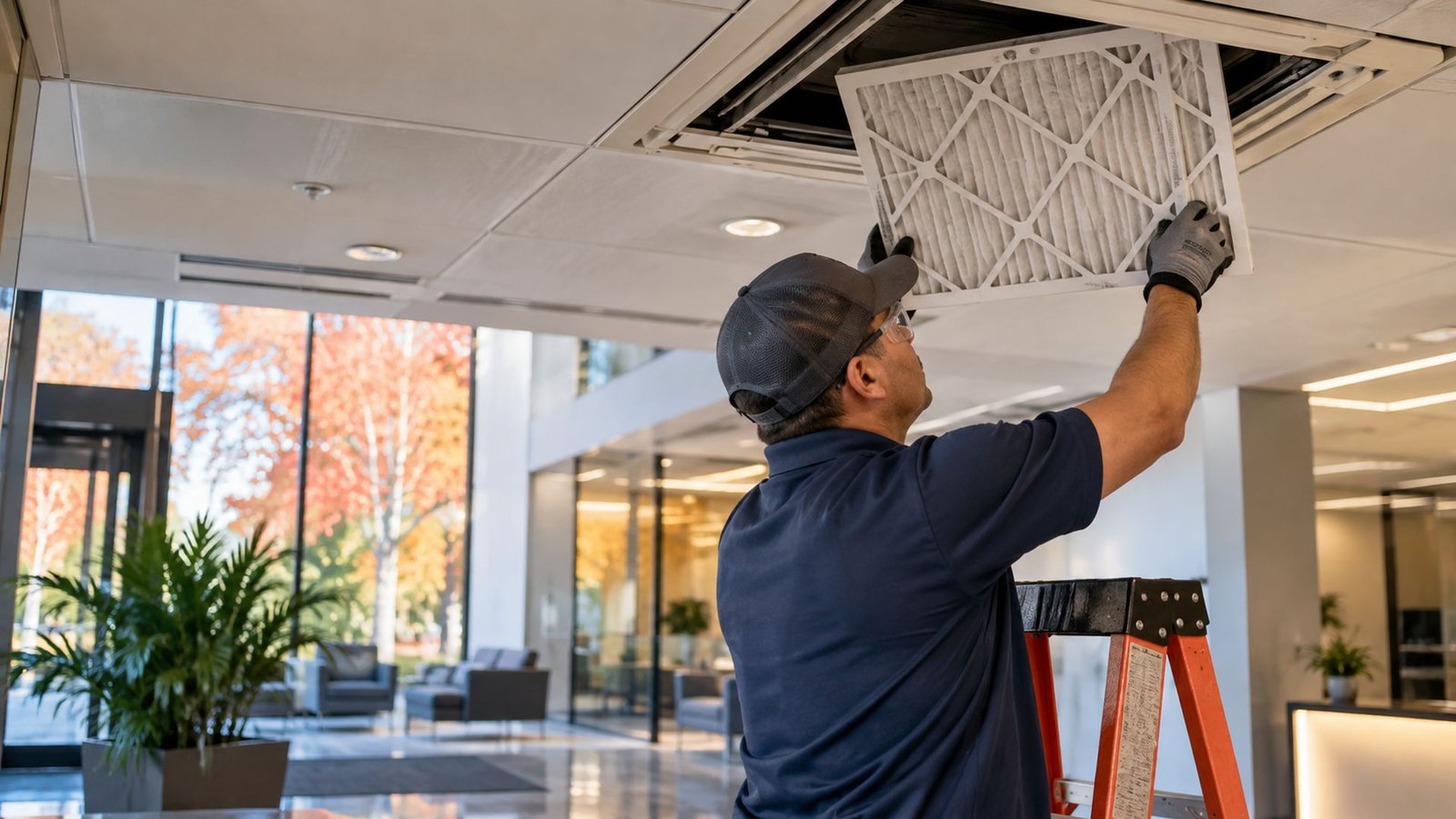
Inspect all air handling units before switching completely over to the heating schedule. Replace worn pre-filters, clean supply grilles, and verify that damper controls allow adequate fresh air circulation without compromising energy targets.
2. Implement Walk-Off Mat Systems
Up to 80% of indoor dust and debris is tracked in on shoe soles. Deploy 12 to 15 feet of high-performance walk-off matting at all primary building entrances during fall to capture moisture, mud, and fallen leaf detritus.
3. Deploy HEPA-Filtered Commercial Vacuuming
Ensure night-cleaning crews utilize sealed-system HEPA vacuums on all carpeted floors, runners, and upholstered seating. Standard vacuums allow sub-micron dust to blow back out through exhaust ports.
4. Schedule Targeted Deep Cleaning
Target hidden dust reservoirs such as high ledges, light fixtures, acoustic ceiling tiles, and above-drop-ceiling plenums before heating fans run at full capacity.
Streamlining IAQ with Professional Janitorial Support
Managing seasonal air quality transitions alongside daily facility operations can strain internal maintenance teams. Partnering with a dedicated commercial cleaning contractor ensures your building meets rigorous cleanliness and health standards year-round.
At Cabbros Cleaning, we provide targeted commercial janitorial solutions designed to protect indoor air quality and preserve your property’s value:
- Maintain spotless, allergen-free work environments through our comprehensive Janitorial Services.
- Deep-clean high-traffic floor coverings and strip away trapped autumn dirt using our specialized Carpet Cleaning & Floor Care.
- Safeguard tenant health during seasonal illness surges with hospital-grade Disinfection Services.
- Prepare post-construction or renovated spaces for occupancy without dust carryover via our Post-Construction Cleaning.
Explore our complete suite of custom facility maintenance solutions on the Cabbros Cleaning Services Page.
Final Thoughts
Autumn IAQ management doesn’t have to be a reactive battle against tenant complaints. By combining proactive HVAC filter schedules with HEPA-backed cleaning routines, facility managers can easily control seasonal dust spikes and maintain a healthier, more productive indoor environment all autumn long.
For businesses evaluating commercial cleaning services in Chehalis and throughout Southwest Washington, visit the Cabbros Cleaning Nextdoor profile to connect with our local team and learn more about our presence in the community.
Explore More About Cabbros Cleaning
Learn more about our team, explore professional profiles, and discover additional resources and insights.
About Marco Cabrera
Learn more about Marco on Medium.
Explore More Links
Find additional profiles and resources.
Professional Profile
View Marco Cabrera on Crunchbase.
See More Related Articles
Explore additional articles and insights.