Help Articles
Peak Cold & Flu Season Sanitation: Advanced Touchpoint Disinfection for PNW Workplaces
As autumn transitions into winter across the Pacific Northwest (PNW), local businesses face a familiar seasonal challenge. The combination of damp, rainy weather, reduced ventilation, and increased indoor gatherings creates an ideal environment for respiratory viruses like influenza, rhinovirus, and RSV to thrive.
During peak illness months, standard nightly janitorial sweeps are no longer enough to protect your team’s health. Safeguarding your workforce and maintaining business continuity requires a targeted approach: advanced touchpoint disinfection.
Understanding High-Touch Surfaces (The Workplace “Hotspots”)
Pathogens can survive on hard surfaces for anywhere from several hours up to 48 hours. When employees interact with shared fixtures throughout the workday, these surfaces act as primary transmission hubs.
To build an effective sanitation barrier, focus disinfection efforts on these critical touchpoints:
- Entryways & Common Areas: Exterior door handles, push plates, elevator buttons, stairwell handrails, and reception desk surfaces.
- Workstations & Tech: Desktop surfaces, shared computer keyboards, computer mice, touchscreens, and desk phones.
- Breakrooms & Kitchens: Refrigerator door handles, microwave keypads, coffee maker controls, sink faucets, and cabinet hardware.
- Restrooms: Stall latches, flush handles, paper towel dispenser levers, hand dryer buttons, and main door handles.
- Conference Rooms: Shared AV remote controls, HDMI cables, whiteboard markers, and conference table edges.
3 Pillars of Advanced Touchpoint Disinfection
Effective sanitation goes beyond simply wiping down a desk with a damp cloth. Implementing advanced touchpoint disinfection requires adherence to key scientific principles:
1. Distinguish Between Cleaning, Sanitizing, and Disinfecting
- Cleaning: Removes visible dirt, dust, and organic debris using water and detergents. It lowers pathogen counts but does not necessarily kill them.
- Sanitizing: Reduces bacteria on surfaces to levels deemed safe by public health standards.
- Disinfecting: Uses specialized chemical formulations to destroy 99.999% of specific viruses and bacteria on hard, non-porous surfaces. Disinfection must always follow cleaning on dirty surfaces to be fully effective.
2. Respect Product Dwell Time
One of the most common mistakes in commercial sanitation is spraying a disinfectant and immediately wiping it away. Every chemical disinfectant requires a specific dwell time—the amount of time the surface must remain visibly wet to successfully neutralize target viruses. Dwell times typically range from 30 seconds to 10 minutes depending on the EPA-registered formulation.
3. Eliminate Cross-Contamination with Color-Coded Microfiber
Using the same rag across multiple rooms spreads pathogens rather than removing them. Professional sanitation protocols rely on commercial-grade microfiber towels categorized by color (e.g., red for restrooms, blue for general office desks, green for food preparation areas) to ensure zero cross-contamination.
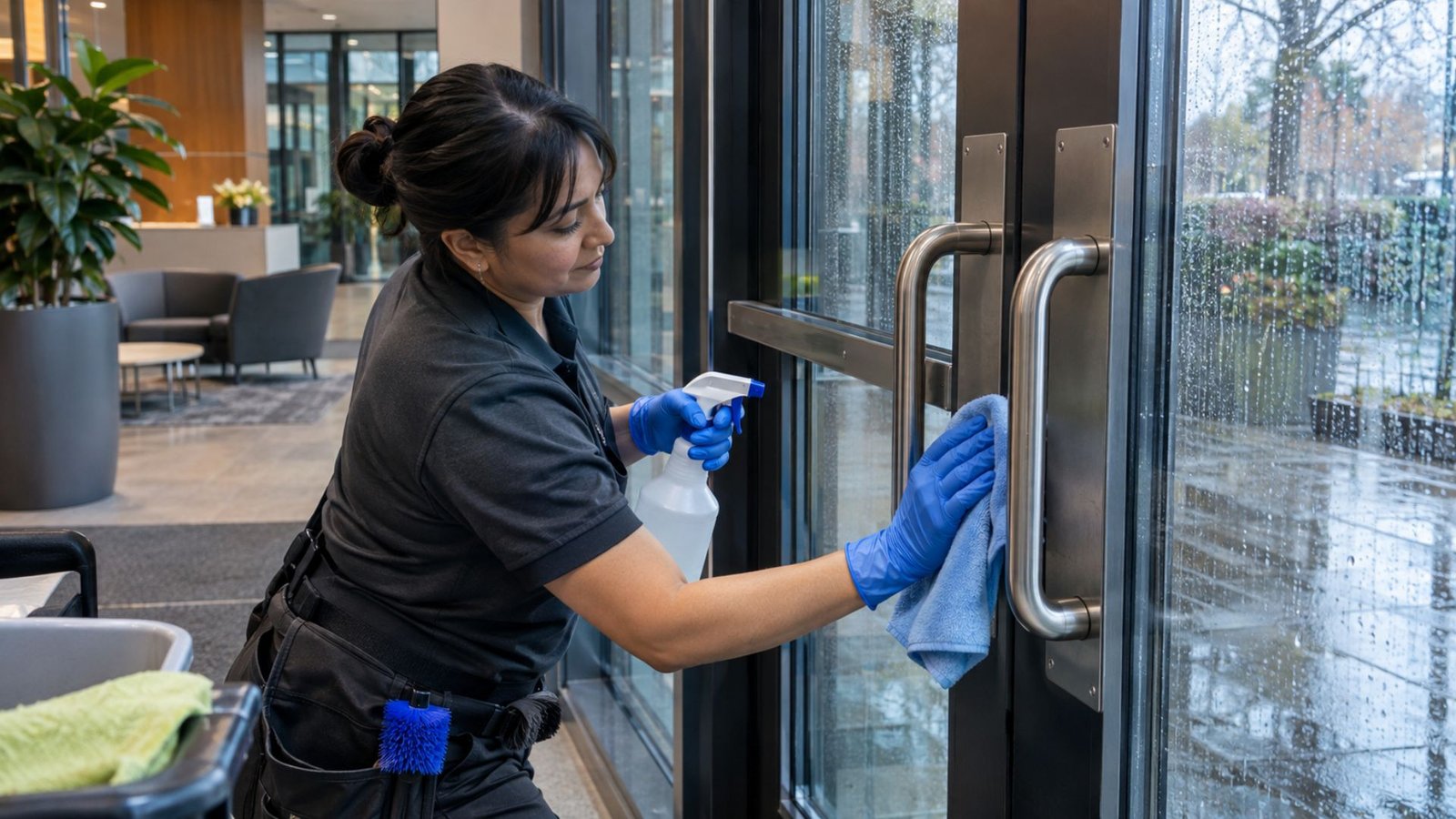
Tailoring Sanitation for the Pacific Northwest Climate
The PNW’s unique climate impacts building hygiene significantly during cold and flu season:
- Increased Moisture Tracking: Constant rain leads to wet shoes and damp outerwear, tracking moisture and mud across entrance flooring and lobbies. High humidity inside entryways can trap airborne contaminants and create organic breeding grounds if carpets and hard floors aren’t maintained.
- Sealed Indoor Air: Cooler temperatures keep windows shut tight, meaning circulating air relies entirely on HVAC filtration. Frequent surface disinfection works hand-in-hand with clean HVAC filters to reduce overall pathogen density.
Elevate Your Facility’s Defense with Cabbros Cleaning
Maintaining a rigorous daily disinfection schedule can overwhelm internal staff. Partnering with a professional commercial cleaning service ensures your workplace remains safe, presentable, and healthy throughout the peak flu season.
At Cabbros Cleaning, we offer specialized cleaning programs designed to target high-traffic touchpoints and maintain pristine facility standards:
- Commercial Office Cleaning: Comprehensive after-hours janitorial cleaning tailored to your office footprint, focusing on detailed surface disinfection and common area upkeep.
- Janitorial & Porter Services: Dedicated daytime porters to continuously sanitize high-touch fixtures, restock paper supplies, and maintain lobbies during peak operating hours.
- Deep Cleaning & Disinfection Services: High-intensity sanitization protocols ideal for pre-season readiness or targeted outbreak responses.
- Commercial Floor & Carpet Care: Specialized floor extraction and mat maintenance to handle the dirt, mud, and water tracked in during wet PNW winters.
Final Thoughts
As the Pacific Northwest shifts into its wet, colder months, proactive sanitation becomes your facility’s best defense against seasonal illness outbreaks. By prioritizing high-touch surfaces, strictly adhering to disinfectant dwell times, and partnering with an experienced commercial cleaning provider like Cabbros Cleaning, you can keep your workforce healthy and resilient all season long.
Explore More About Cabbros Cleaning
Learn more about our team, explore professional profiles, and discover additional resources and insights.
About Marco Cabrera
Learn more about Marco on Medium.
Explore More Links
Find additional profiles and resources.
Professional Profile
View Marco Cabrera on Crunchbase.
See More Related Articles
Explore additional articles and insights.
For businesses evaluating commercial cleaning services in Chehalis and throughout Southwest Washington, visit the Cabbros Cleaning Nextdoor profile to connect with our local team and learn more about our presence in the community.